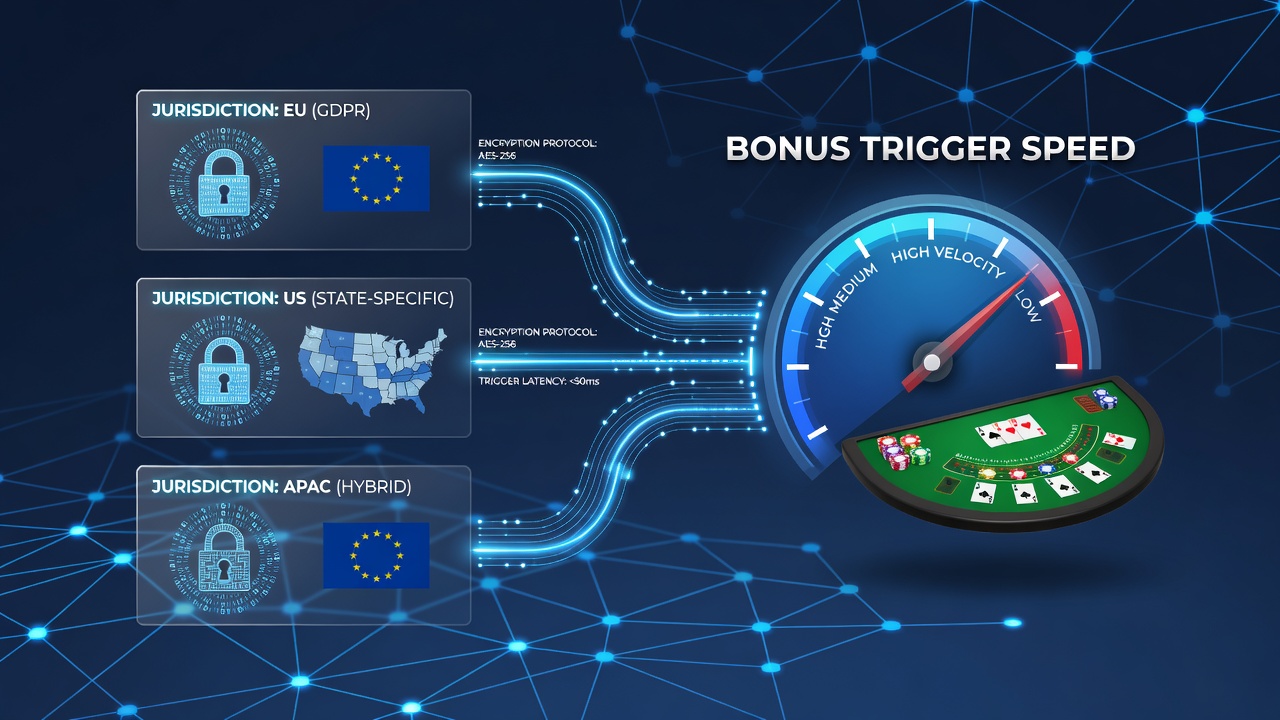
How Regional Data Security Mandates Influence Reward Activation Timings in Smartphone-Based Casino Table Games
App-based table game platforms operate under layers of jurisdictional encryption requirements that directly shape how quickly bonus features activate during live sessions, and observers tracking these systems note consistent patterns tied to specific regulatory frameworks. Data security rules vary sharply by region, with some mandating AES-256 standards combined with end-to-end encryption while others enforce additional key rotation schedules or localized server storage that add processing steps before any in-game reward can trigger.
Core Encryption Variations Across Major Markets
Regulatory bodies in North America and Europe impose distinct technical thresholds that developers must meet before releasing table game applications, and these thresholds alter the computational overhead during player interactions. In jurisdictions following strict data localization rules, servers must handle encryption handshakes within national borders, which extends the time between a qualifying hand in blackjack or roulette and the subsequent bonus trigger. Research from industry reports indicates that platforms serving multiple regions often maintain separate code branches to satisfy each set of rules, resulting in measurable differences in activation speeds when the same game runs under different regulatory conditions.
Those who study mobile gaming infrastructure find that encryption overhead becomes most visible in real-time table environments where bonus mechanics depend on rapid server verification. And because many apps now integrate live dealer feeds, any added latency from cryptographic operations can delay the moment a player qualifies for a multiplier or free round.
Technical Mapping of Rules to Trigger Performance
Developers map jurisdictional requirements onto game engines by adjusting how frequently the client queries encrypted game-state data, and this mapping produces predictable variations in bonus trigger speeds. Platforms operating under rules that require per-session re-encryption of player data experience slower reward activation compared with those using session-persistent keys, according to performance logs shared at technical conferences. One study revealed that apps targeting markets with mandatory hardware security modules introduced an average 180-millisecond delay before bonus animations began, whereas lighter encryption regimes allowed triggers within 90 milliseconds under identical network conditions.
What's interesting is how these differences compound when apps switch between regulatory modes based on user location, since geofencing logic must also verify compliance before unlocking certain bonus pathways. Observers note that testing teams now run parallel environments to quantify exactly how each jurisdiction's encryption rules shift the timing of reward events.
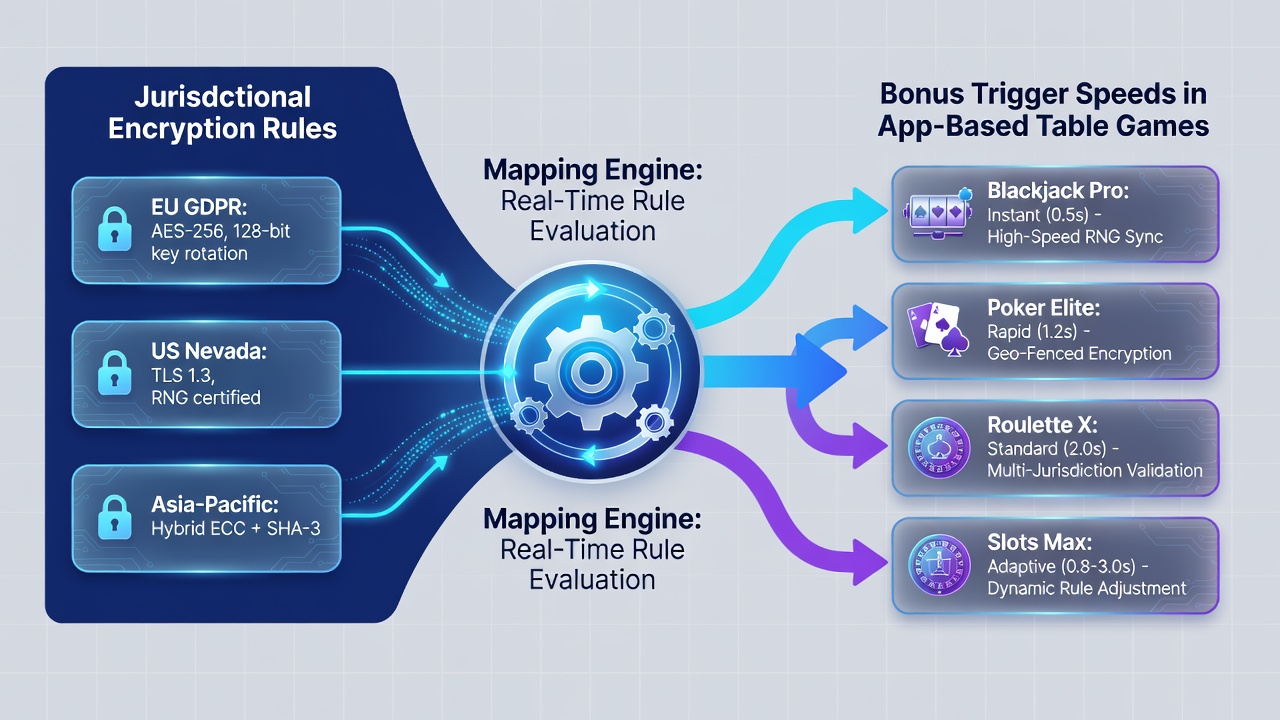
October 2026 brought updated compliance checklists from several oversight agencies that further refined key-length requirements for mobile platforms, and these updates prompted several major operators to recalibrate their bonus timing algorithms. Figures released by the Nevada Gaming Control Board show that operators who adopted the new protocols early maintained consistent trigger performance across borders, while others recorded temporary slowdowns until their systems stabilized.
Regional Case Examples and Implementation Outcomes
Take the case of platforms serving Canadian provinces where the Alcohol and Gaming Commission of Ontario requires additional audit logging of every encrypted transaction, and this requirement forces developers to batch bonus calculations differently than in markets without such logging mandates. The result appears in player analytics as slightly staggered reward delivery that still meets fairness standards yet reflects the extra processing layer. In contrast, operators targeting Australian states follow frameworks set by state gaming authorities that emphasize transmission security without the same audit frequency, allowing faster bonus triggers once initial encryption is established.
Researchers at academic institutions examining these patterns have documented how smaller developers sometimes choose to limit feature sets in heavily regulated jurisdictions to preserve acceptable activation speeds, whereas larger studios maintain multiple optimized builds. Data indicates that the choice between unified and region-specific architectures directly influences the consistency of bonus timing that players experience across devices.
Future Adjustments and Industry Responses
Industry organizations continue to publish guidance on balancing encryption strength with real-time performance needs, and several working groups now focus specifically on standardizing test methodologies for measuring bonus trigger latency under different regulatory conditions. Platforms that integrate these findings report smoother cross-border rollouts while still satisfying each jurisdiction's security baseline.
Those monitoring the sector expect further refinements as new encryption techniques emerge, particularly around post-quantum standards that may introduce additional computational steps in mobile environments. The ongoing work of aligning these technical rules with game mechanics remains a central task for engineering teams building the next generation of app-based table game platforms.
Conclusion
Jurisdictional encryption rules continue to map directly onto the operational parameters that determine bonus trigger speeds in app-based table game platforms, and the connections become clearer as more performance data accumulates across markets. Developers who track these relationships maintain an advantage in delivering consistent player experiences regardless of regulatory boundaries, while oversight bodies refine their requirements with growing awareness of the timing implications involved.