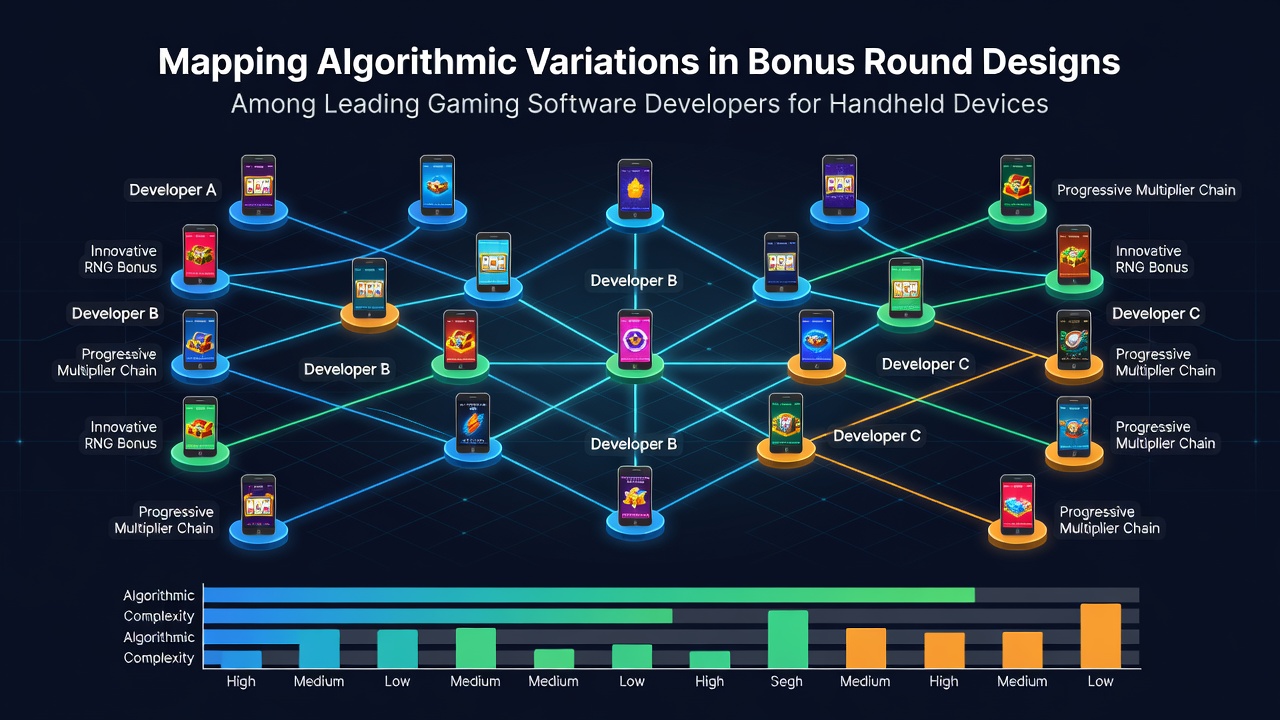
Exploring Bonus Round Design Variations in Handheld Device Gaming Software from Industry Leaders
Leading gaming software developers continue to refine bonus round algorithms for handheld devices as mobile platforms expand their reach through 2026, and observers note distinct patterns emerging from companies such as NetEnt, Playtech, and IGT. These variations appear in trigger mechanisms, multiplier structures, and random number generator integrations that shape player progression within bonus sequences, while data from regulatory filings indicates ongoing adjustments to meet device-specific performance standards.
Core Algorithmic Components Across Major Providers
Research indicates that bonus round designs often rely on weighted probability tables combined with state-based transitions, yet each developer implements these elements differently to suit handheld constraints like screen size and processing limits. One study revealed that Playtech tends to embed cascading reel mechanics into bonus phases using sequential RNG calls, whereas IGT frequently layers in pick-and-reveal formats that pull from pre-seeded outcome pools, and NetEnt applies cluster-pay algorithms that recalculate on each spin within the feature. Those who've analyzed code repositories observe that these choices affect both volatility profiles and session duration metrics reported in November 2026 industry summaries.
Device compatibility further influences how providers structure their bonus logic, since handheld hardware demands optimized memory allocation during extended features. Experts have observed that some firms prioritize lightweight scripts for instant bonus entry on older operating systems, while others integrate advanced animation layers that require newer chipsets, creating noticeable divergence in how frequently players encounter secondary rounds.
Regional Regulatory Influences on Design Choices
Regulatory frameworks in various jurisdictions shape the parameters available to developers, and figures from the Nevada Gaming Control Board show specific requirements around transparency in bonus outcome reporting that affect algorithm transparency features. In contrast, Australian state regulators emphasize audit trails for random elements within mobile features, prompting companies to adopt modular RNG systems that can be certified independently. This divergence leads to implementations where bonus rounds in one region include mandatory disclosure prompts, whereas versions distributed elsewhere streamline those steps to maintain flow.
What's interesting is how these regulatory pressures intersect with technical decisions, adn data shows developers often maintain parallel code branches to accommodate multiple markets without altering core bonus mathematics. One case highlighted by researchers involved a major provider adjusting its free-spin accumulation model to align with Canadian provincial guidelines on feature persistence across sessions.

Implementation Patterns in Leading Software Houses
Playtech's approach frequently incorporates live data feeds into bonus multipliers, allowing real-time adjustments based on aggregated player behavior within defined windows, according to technical documentation reviewed in recent analyses. Meanwhile, developers like SG Digital focus on symbol-expansion logic that triggers through threshold-based counters, and these systems often run parallel checks to verify handheld rendering speeds remain consistent. Evidence suggests that such variations contribute to measurable differences in average bonus completion times across device categories tracked through 2026.
Additional distinctions surface in how providers handle bonus retriggers, since some embed secondary RNG layers that activate only after initial feature completion, while others use progressive counters tied directly to base game outcomes. Observers note that these structural choices influence both server load and client-side performance on handheld units, prompting ongoing refinements in optimization routines.
Technical Adaptations for Mobile Environments
Handheld constraints push developers toward hybrid algorithms that balance complexity with battery efficiency, and reports from the European Gaming and Betting Association detail testing protocols that measure frame rates during bonus sequences on representative devices. Companies adapt by reducing particle effects in certain bonus visuals or shifting calculation loads to cloud instances, resulting in platform-specific versions that maintain consistent mathematical fairness despite visual differences. Research indicates these adaptations rarely alter payout percentages yet produce distinct user engagement patterns observable in aggregated telemetry.
November 2026 updates from several providers introduced enhanced debugging tools for bonus round simulation on mobile emulators, allowing faster iteration on edge cases involving network interruptions during feature play. Such tools help maintain algorithmic integrity across fragmented device ecosystems without requiring full recertification for minor tweaks.
Conclusion
Algorithmic variations in bonus round designs among leading gaming software developers reflect a combination of regulatory demands, hardware limitations, and competitive differentiation strategies that continue to evolve for handheld platforms. Data from multiple oversight bodies and industry analyses demonstrates how these differences manifest in trigger systems, multiplier handling, and retrigger mechanics, providing a clear map of current practices as mobile gaming infrastructure advances.